The Best Trailer Setup for Pressure Washing Businesses
We have 692 Trailers In Stock!
A pressure washing trailer setup can make the difference between a business that constantly wastes time and one that operates efficiently from job to job. While it’s possible to start with equipment loaded in the bed of a truck or scattered throughout a basic utility trailer, most growing pressure washing businesses eventually realize that organization and workflow matter just as much as the equipment itself.
A well-designed trailer setup allows crews to arrive on-site ready to work, reduces setup and breakdown time, and helps keep expensive equipment protected and organized. It can also improve professionalism, making a stronger impression on customers before the work even begins.
The challenge is that there isn’t a one-size-fits-all solution. A solo operator cleaning residential driveways may have very different needs than a company handling commercial properties, fleet washing, or large-scale soft washing projects. The goal is to create a pressure washing trailer setup that supports your current operation while leaving room for future growth.
Table of Contents
Why Trailer Design Matters in the Pressure Washing Industry
Pressure washing businesses rely on more than just a pressure washer.
Water tanks, hose reels, surface cleaners, soft wash systems, chemical storage, fuel tanks, generators, and additional accessories all need a place within the trailer. Without proper organization, equipment can quickly become difficult to access, creating unnecessary delays throughout the workday.
A well-designed trailer setup helps streamline operations. Instead of unloading equipment piece by piece at every jobsite, operators can work directly from the trailer and focus on completing the work efficiently.
For businesses handling multiple jobs per day, those time savings can add up quickly.
Open Utility Trailers Remain a Popular Choice
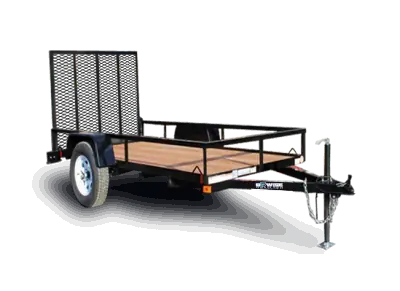
Many pressure washing companies start with an open utility trailer.
Open trailers offer several advantages, including affordability, simplicity, and flexibility. Equipment is easily accessible, loading and unloading is straightforward, and modifications can often be made as the business grows.
For newer businesses, a utility trailer can provide enough space for a pressure washer, hose reels, water tank, and basic equipment while keeping startup costs manageable.
Many successful pressure washing operations continue using open trailers for years because of their versatility and ease of use.
Enclosed Trailers Offer Additional Protection
As businesses expand, many owners begin considering enclosed trailers.
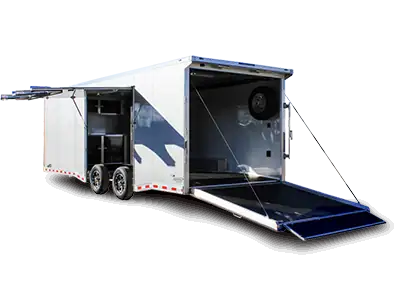
An enclosed trailer provides protection from weather, road debris, theft, and UV exposure. Expensive equipment, chemicals, and accessories remain protected while being transported between jobs.
Enclosed trailers can also present a more professional appearance when arriving at customer properties. Many business owners appreciate having a mobile workspace where equipment remains organized and secure.
The tradeoff is typically a higher purchase price and increased overall trailer weight. However, for some operations, the additional protection and security justify the investment.
One of the most important parts of any pressure washing trailer setup is water tank placement.
Water is heavy. A full tank can add thousands of pounds to the trailer depending on capacity. Improper placement can negatively affect trailer balance, towing performance, and overall safety.
Many experienced operators position water tanks to help distribute weight evenly across the trailer. This helps improve stability and reduce unnecessary strain on the tow vehicle. Because every trailer configuration is different, proper weight distribution should always be considered during the planning process.
Hose Reel Organization Improves Efficiency
Few things slow down a pressure washing crew faster than dealing with tangled hoses. Pressure hoses, supply hoses, soft wash lines, and additional accessories can quickly create clutter if they aren’t properly organized. This is one reason hose reels have become such a common feature on professional pressure washing trailers.
A well-organized hose reel setup can dramatically reduce setup and breakdown times while helping protect hoses from unnecessary wear.
Many operators consider hose reels one of the most valuable upgrades they make as their business grows.
Don’t Forget About Storage
One mistake many new pressure washing businesses make is focusing entirely on the primary equipment while overlooking storage needs.
Over time, additional tools inevitably accumulate. Surface cleaners, extension wands, nozzles, chemicals, spare parts, safety equipment, and maintenance supplies all require storage space.
Without dedicated storage areas, equipment often becomes scattered throughout the trailer, making it harder to locate and increasing the risk of damage.
A trailer that includes organized storage solutions typically creates a more efficient work environment and a more professional appearance.
Trailer Capacity Matters More Than You Think
Pressure washing equipment can become surprisingly heavy. Between water tanks, pressure washers, generators, chemical systems, hose reels, and accessories, trailer weights can increase rapidly. Many owners underestimate how much capacity they actually need until the trailer is fully loaded and ready for work.
This is why choosing a trailer with adequate capacity is so important. The trailer should not only accommodate current equipment but also provide room for future expansion.
A slightly larger trailer often proves far more useful than a setup that’s already operating near its limits.
Custom Trailer Setups Are Becoming More Common
As pressure washing businesses grow, many owners begin customizing their trailers to improve efficiency.
Custom shelving, equipment mounts, storage compartments, hose reel racks, chemical containment systems, and specialized layouts can all help support specific workflows. The goal is not simply to add more equipment but to make the equipment easier to access and operate.
Many successful operators eventually develop trailer layouts that allow them to complete most tasks directly from the trailer without constant unloading and repositioning.
Think About Your Future Business Goals
One of the most common regrets trailer owners have is buying a setup that only supports their current operation. Pressure washing businesses often grow faster than expected. Additional equipment, larger water tanks, new service offerings, and extra crew members can quickly change what the business requires from a trailer.
Planning for future growth helps avoid the need for a complete trailer replacement after only a few years. A setup that allows room for expansion often provides better long-term value.
The best trailer isn’t necessarily the one that fits today’s equipment perfectly. It’s the one that continues supporting the business as it grows.
Building the Right Pressure Washing Trailer
The ideal trailer setup depends on the size of the business, the services offered, and the owner’s long-term goals. Some businesses thrive with a simple utility trailer setup, while others benefit from enclosed trailers and customized equipment layouts.
The key is creating a system that improves efficiency, protects equipment, and allows crews to work productively throughout the day.
When evaluating trailer options, one needs to consider capacity, organization, weight distribution, storage, and future growth rather than focusing solely on initial cost.
Finding a Trailer That Supports Your Business
A pressure washing trailer should function as more than a transportation tool. It should serve as a mobile workstation that helps your business operate efficiently and professionally.
Whether you’re building your first trailer setup or upgrading an existing operation, comparing different trailer styles and configurations can help identify the best fit for your workflow. Utility trailers, enclosed trailers, equipment trailers, and custom modifications all offer advantages depending on the specific needs of the business.
With a large inventory of utility trailers, enclosed trailers, and equipment hauling solutions, Brechbill Trailers helps business owners find trailers that support both their current operations and future growth plans. The right trailer setup can improve productivity, simplify daily operations, and help create a more professional experience for every customer.
Frequently Asked Questions
What type of trailer is best for a pressure washing business?
Many pressure washing businesses use utility trailers because they are versatile, affordable, and easy to customize. Enclosed trailers are also popular for businesses seeking additional security and weather protection.
What size trailer do I need for pressure washing equipment?
Trailer size depends on the amount of equipment being transported. Water tanks, hose reels, pressure washers, generators, and storage needs should all be considered.
Is an enclosed trailer better for pressure washing?
An enclosed trailer offers protection from weather and theft, but it also costs more and weighs more than a comparable utility trailer.
How much weight does a pressure washing trailer carry?
The total weight depends on equipment and water capacity. Water alone can add significant weight, making trailer capacity an important consideration.
Absolute wonderful service today. I was passing through the area on a cross country trip with my travel trailer. During a fuel stop that happened to be near their shop, I noticed that my leaf spring hanger was severely damaged. In talking with one of the service techs, he told me that if I was able to limp it to their facility they would be able to get me back on the road in no time.
From the time I unhooked the trailer on their lot until I was hooked back up and on my way was about 90 minutes. They were absolutely wonderful and communicated the whole time. The price was exceptionally reasonable considering it was an emergency on my end.
I wish I lived closer so they could become my full-time shop! They took a very stressful situation and were able to really help me out in a bind. Thank you again!
Jordan Wiggins 05/01/2026
Best place to buy a trailer. We grabbed a 6x12x4 dump trailer. Quinn made sure the process was easy and smooth! Such a great guy, came with my three boys (3,6 & 8) and he made them feel right at home. Jared spoiled my kids with snacks!!! lol Great team! Thanks you all
Dan Tabler 05/01/2025
Great place to do business, no pressure very professional and they don’t try to push you into anything. I got several quotes and overall they are the best value
Jonathan 04/30/2025
Had a fantastic experience. Super friendly and helpful staff made my out of state purchase quick and painless. Very knowledgeable and the best prices I could find for hundreds of miles. Highly recommend!
Scot Evans 04/29/2025
I came a very long distance and worked with Shane over a three week period, and I must say from day one through the day I picked up my unit, the service was outstanding. Not only do they sell superior products, but the customer service is top-notch. Thank you, Brechbill Trailer Sales!
Jeffrey Bagley 04/29/2025
Purchased a new Eby dump trailer. Great experience during both a phone order/ purchase, and on my pick up / delivery day.
No hidden fee’s or surprises. I would recommend them as everyone I encountered was very positive and helpful.
Cystal Garrett 04/25/2025
We brought our B wise dump trailer to Jud for things that needed fix and he did an awesome job. Also we had a local Chevy dealer install a brake controller on our 2023 Tahoe, after the 3rd controller, we had Jud look at it. Jud found that the Chevy dealership installed them wrong and it was burning the brake controller module up. Jud took the time to replace it and install a new one for us, he is very professional and explained everything to us. 10 out of 10, we will be back to Brechbill for anything trailer related. Jud definitely earned our trust..