Popular Searches:
Displaying top search terms based on the last 90 days.
Popular Searches:
Displaying top search terms based on the last 90 days.


One of the biggest decisions trailer buyers face isn’t necessarily choosing a brand or even a trailer type. It’s deciding whether a standard production trailer will meet their needs or if a custom trailer is worth the additional investment.
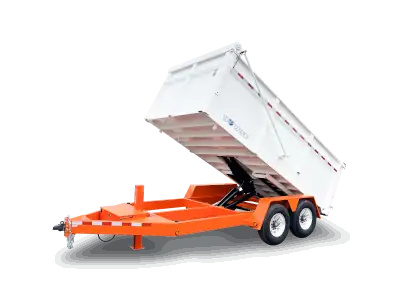
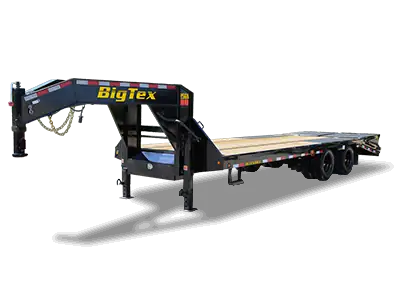
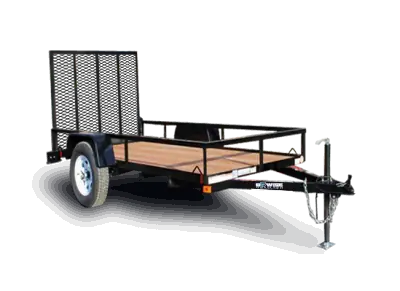
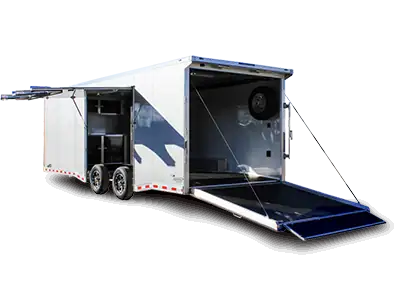
For many buyers, a standard trailer offers everything they need right off the lot. Modern manufacturers produce a wide range of utility trailers, dump trailers, equipment trailers, enclosed trailers, and goosenecks designed to handle common hauling applications. In many cases, these trailers are readily available, cost-effective, and capable of performing exactly as intended.
At the same time, there are situations where a standard trailer simply isn’t the best solution. Some businesses haul specialized equipment, operate in unique environments, or require features that aren’t commonly available on production models. In those cases, a custom trailer may provide advantages that justify the additional cost and planning involved.
The key is understanding your actual needs before making a purchase.
There’s a reason standard trailers account for the vast majority of trailer sales. Manufacturers have spent decades refining their designs based on feedback from contractors, landscapers, farmers, equipment operators, and recreational users.
Today’s standard trailers are more capable than many people realize. Most buyers can find a trailer that closely matches their hauling requirements without needing extensive modifications. Whether you’re transporting construction equipment, hauling landscaping materials, moving vehicles, or carrying recreational equipment, there is often a production model specifically designed for that purpose.
Another advantage is availability. Standard trailers are typically in stock and ready for immediate purchase. Buyers can compare multiple models, evaluate different sizes and configurations, and leave with a trailer that same day in many cases.
For businesses that need equipment quickly, avoiding long build times can be a significant advantage.
Many buyers initially assume they need a custom trailer when they really need a different standard model.
This is something we see regularly. A contractor may arrive looking for extensive modifications only to discover that a manufacturer already offers a trailer designed around their application. The same thing happens with landscapers, property owners, and equipment operators who simply weren’t aware of all the available options.
If your hauling needs are relatively straightforward and your equipment falls within common dimensions and weight ranges, a standard trailer is often the most practical choice. Not only does this help reduce upfront costs, but it can also simplify future maintenance and repairs since replacement parts are readily available.
In many situations, buying the right standard trailer provides all the functionality a buyer needs without the added expense of customization.
Custom trailers become more attractive when your equipment or workflow falls outside the norm.
Some businesses transport specialized machinery that doesn’t fit traditional trailer layouts. Others require unique storage solutions, custom loading configurations, reinforced structures, or specific dimensions that aren’t available through standard production models.
In these situations, a custom trailer can help improve efficiency, increase safety, and eliminate the compromises that often come with trying to adapt a standard trailer to an unusual application.
The goal of customization isn’t simply to make a trailer different. It’s to make the trailer better suited for the work being performed.
When done properly, custom features can create meaningful productivity gains over the life of the trailer.
One mistake buyers sometimes make is focusing entirely on the initial purchase price.
A standard trailer may cost less upfront, but if it creates daily inefficiencies or requires frequent workarounds, those costs can add up over time. Likewise, spending money on custom features that provide little practical benefit may result in an unnecessarily expensive trailer.
The most important question isn’t whether a custom trailer costs more. It’s whether the trailer will perform the job effectively for years to come.
Sometimes the right answer is a completely standard trailer. Other times, a few carefully chosen modifications can dramatically improve functionality.
The best value often comes from finding the balance between the two.
One common misconception is that a custom trailer must be designed entirely from the ground up.
In reality, many buyers choose a standard trailer and add specific modifications to better fit their operation. This approach often provides the best of both worlds by combining the proven reliability of a production model with features tailored to the owner’s needs.
Examples might include additional tie-down points, specialized storage compartments, upgraded brake systems, custom ramps, equipment racks, lighting upgrades, or structural reinforcements.
These types of modifications can often provide significant benefits without requiring a completely custom-built trailer.
For many buyers, this middle ground turns out to be the most practical solution.
One of the most important parts of choosing a trailer is considering how your needs may change over time.
Businesses grow. Equipment changes. New services are added. What works perfectly today may become limiting several years from now.
This is why many experienced buyers focus on long-term flexibility when evaluating trailers. A trailer should support not only your current operation but also future growth whenever possible.
Whether you’re considering a standard model or a customized solution, it’s worth thinking about where your business may be three, five, or even ten years down the road.
Making a slightly larger investment today can sometimes prevent the need for another trailer purchase later.
There are situations where no production trailer can adequately address a buyer’s needs.
Businesses hauling specialized equipment often encounter challenges related to loading angles, weight distribution, storage requirements, or equipment dimensions. In these cases, custom fabrication can provide solutions that simply aren’t available through traditional manufacturing options.
Custom fabrication can also be valuable when modifying an existing trailer. Rather than replacing a trailer entirely, some owners choose to upgrade or alter their current trailer to better match evolving operational requirements.
When performed by experienced fabricators, these modifications can significantly extend the usefulness and versatility of a trailer.
The decision ultimately comes down to how you plan to use the trailer.
If your hauling needs fit within common applications, a standard trailer will likely provide excellent value while offering immediate availability and lower upfront costs. Modern production trailers are capable of handling a wide variety of commercial, agricultural, and recreational hauling tasks.
However, if your equipment, workflow, or operational requirements are highly specialized, customization may be worth exploring. The right modifications can improve productivity, simplify loading, and help eliminate daily frustrations that impact efficiency.
The key is choosing a trailer that supports the way you actually work rather than forcing your operation to adapt to the trailer.
The best trailer isn’t necessarily the most customized or the most expensive. It’s the trailer that accomplishes your hauling goals safely, efficiently, and reliably.
Many buyers are surprised to discover how many options are available once they begin comparing different trailer types, configurations, and available upgrades. In some cases, a standard trailer provides the perfect solution. In others, custom fabrication or specialized modifications may offer clear advantages.
With one of the largest trailer inventories in Pennsylvania and an experienced fabrication and service team, Brechbill Trailers helps buyers evaluate both standard and custom trailer solutions. Whether you’re looking for a trailer that’s ready to work today or exploring modifications tailored to your operation, taking the time to compare your options can help ensure you’re making the right investment for years to come.
Custom trailers can be worthwhile when standard models don’t adequately meet your hauling needs. The value depends on how much the customization improves efficiency, safety, or functionality.
In most cases, standard trailers have lower upfront costs than custom-built trailers. However, the long-term value depends on how well the trailer fits your application.
Yes. Many standard trailers can be upgraded with additional storage, tie-down points, braking systems, lighting, and other custom features.
If your equipment, loading requirements, or workflow can’t be effectively supported by available production trailers, custom solutions may be worth considering.