Popular Searches:
Displaying top search terms based on the last 90 days.
Popular Searches:
Displaying top search terms based on the last 90 days.


Cheap trailers often attract buyers for one simple reason: the price. When you’re comparing multiple trailers that appear similar on the surface, saving a few thousand dollars can seem like an easy decision. After all, if two trailers have wheels, lights, a frame, and a deck, how different can they really be?
It’s a question many buyers ask themselves during the shopping process. Unfortunately, it’s also a question many don’t fully answer until after they’ve owned the trailer for a while. What initially feels like a bargain can sometimes lead to unexpected problems in the future… often the near future.
While not every lower-priced trailer is a bad trailer, choosing solely based on cost can create unexpected expenses down the road. From increased maintenance and downtime to reduced durability and lower resale value, the true cost of a cheap trailer often extends far beyond the sticker price.
One of the biggest misconceptions among first-time buyers is that all trailers are essentially the same.
At a glance, two trailers may appear nearly identical. However, the differences often become obvious once you look closer at the frame construction, welding quality, component selection, axle ratings, brake systems, wiring, and overall attention to detail. Cheap trailers are cheap for a reason….
Manufacturers have countless ways to reduce production costs. Sometimes those savings come from efficiency and smart design. Other times, they come from using lower-quality materials or components that may not perform as well under demanding conditions.
One of the most common complaints owners have after purchasing a cheap trailer is the amount of maintenance required to keep it operating properly.
Electrical issues, premature tire wear, lighting failures, worn suspension components, rust concerns, and brake problems tend to become much more frustrating when they appear earlier than expected.
While any trailer can require maintenance, higher-quality trailers are often built with components designed to withstand years of regular use. Better materials and stronger construction frequently translate into fewer repairs and less downtime.
What initially looked like savings at the dealership can quickly disappear when repair costs begin to accumulate.
For contractors, landscapers, farmers, and business owners, trailer downtime can be expensive.
When a trailer is unavailable, equipment may not reach the jobsite. Materials may not get delivered. Crews may be delayed. Customers may need to be rescheduled. These indirect costs are rarely considered during the buying process, but they can have a significant impact on overall ownership costs.
A trailer that spends more time in the repair shop than on the road often ends up costing far more than expected, regardless of how attractive the initial purchase price may have been.
Many trailer owners eventually learn that the quality of individual components matters just as much as the trailer itself.
Axles, brakes, wiring, couplers, jacks, suspension systems, bearings, and lighting all play important roles in overall reliability. When lower-grade components are used throughout a trailer, wear often occurs more quickly.
This doesn’t necessarily mean immediate failure. Instead, owners may notice a steady stream of small repairs and replacement needs that gradually increase ownership costs.
The difference between a trailer that requires occasional maintenance and one that constantly demands attention can become very noticeable after several years of use.
Pennsylvania weather can be hard on trailers.
Rain, snow, road salt, and seasonal temperature changes create conditions that challenge even well-built equipment. For trailers built with lower-quality finishes or inadequate corrosion protection, rust often becomes a concern much sooner than expected.
What begins as cosmetic corrosion can eventually spread to structural components if left unchecked. Once rust starts affecting the frame, crossmembers, or critical mounting points, repairs become more complicated and expensive.
Buyers often underestimate how much difference quality materials, coatings, and construction practices can make over the life of a trailer.
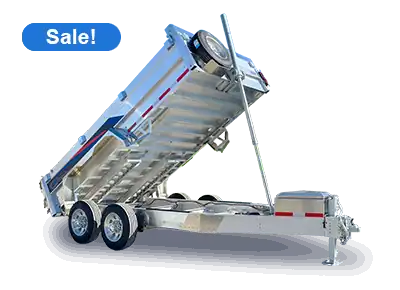
Looking for a rust-free solution? Check out our EBY aluminum trailers for sale here: https://brechbilltrailers.com/blog/eby-dump-trailers-built-in-america/
One of the easiest ways to evaluate trailer quality is to look at resale value.
Certain trailer brands consistently retain value because buyers trust their durability, performance, and reputation. Others depreciate much more rapidly because the market has learned to expect higher maintenance costs or shorter service lives.
A trailer that costs less initially may not actually save money if it loses value significantly faster than a better-built alternative.
When viewed over the course of several years, the gap between purchase price and resale value can be much smaller than many buyers expect.
Many experienced trailer owners eventually shift their perspective when shopping.
Instead of asking which trailer costs the least today, they begin asking which trailer will cost the least to own over the next five or ten years.
Those are very different questions.
A slightly higher upfront investment may result in fewer repairs, improved reliability, stronger resale value, and a better overall ownership experience. When viewed from that perspective, the least expensive trailer is not always the most economical option.
True value often comes from balancing purchase price with long-term performance.
This doesn’t mean every buyer needs the most expensive trailer available.
For occasional users, hobbyists, or owners with relatively light-duty applications, a lower-cost trailer may provide perfectly acceptable performance. The key is matching the trailer to the intended workload.
Problems typically arise when buyers select a trailer designed for occasional use but expect it to handle commercial-level demands.
Understanding how the trailer will actually be used is often more important than simply comparing price tags.
When comparing trailers, it’s helpful to look beyond the sticker price.
Ask questions about the frame. Look at the quality of the welds. Evaluate the braking system, suspension, wiring, and overall construction. Consider the reputation of the manufacturer and the availability of service and replacement parts.
A trailer is more than a collection of steel and components. It’s an investment that may be expected to perform for many years under challenging conditions.
The cheapest trailer on the lot may still be the right choice in some situations. But buyers should understand exactly what they’re getting before making that decision.
Trailer ownership is a long-term experience, not a one-day purchase.
The excitement of saving money upfront tends to fade quickly if reliability problems begin appearing shortly afterward. On the other hand, a well-built trailer that performs consistently year after year often proves to be one of the best investments an owner can make.
The goal shouldn’t be finding the cheapest trailer available. The goal should be finding the trailer that delivers the greatest value over its lifetime.
That’s a distinction many buyers only fully appreciate after they’ve owned a trailer for several years.
Every buyer has a budget, and price will always be an important consideration. However, evaluating quality, durability, reliability, and long-term ownership costs can help provide a more complete picture of overall value.
Comparing trailers side-by-side often reveals differences that aren’t immediately obvious online or in sales brochures. Construction quality, component selection, available features, and manufacturer reputation all play important roles in determining how a trailer performs over time.
With hundreds of trailers in stock from trusted manufacturers, Brechbill Trailers helps buyers compare options, understand the differences between models, and select trailers that align with both their budget and long-term needs. A trailer purchase should be viewed as an investment, and making an informed decision today can help avoid costly lessons tomorrow.
It depends on the application. For occasional use, some lower-cost trailers may perform adequately. For frequent or commercial use, investing in a higher-quality trailer often provides better long-term value.
Differences in frame construction, materials, component quality, braking systems, suspension, corrosion protection, and overall durability all contribute to pricing differences.
Not always, but higher-quality trailers often use better materials and components that can improve reliability, durability, and resale value over time.
Buyers should evaluate construction quality, axle ratings, braking systems, manufacturer reputation, available features, warranty coverage, and expected long-term ownership costs.

Eric Wolf
08/18/2026
Absolute wonderful service today. I was passing through the area on a cross country trip with my travel trailer. During a fuel stop that happened to be near their shop, I noticed that my leaf spring hanger was severely damaged. In talking with one of the service techs, he told me that if I was able to limp it to their facility they would be able to get me back on the road in no time. From the time I unhooked the trailer on their lot until I was hooked back up and on my way was about 90 minutes. They were absolutely wonderful and communicated the whole time. The price was exceptionally reasonable considering it was an emergency on my end. I wish I lived closer so they could become my full-time shop! They took a very stressful situation and were able to really help me out in a bind. Thank you again!

Jordan Wiggins
05/01/2026
Best place to buy a trailer. We grabbed a 6x12x4 dump trailer. Quinn made sure the process was easy and smooth! Such a great guy, came with my three boys (3,6 & 8) and he made them feel right at home. Jared spoiled my kids with snacks!!! lol Great team! Thanks you all

Dan Tabler
05/01/2025
Great place to do business, no pressure very professional and they don’t try to push you into anything. I got several quotes and overall they are the best value

Jonathan
04/30/2025
Had a fantastic experience. Super friendly and helpful staff made my out of state purchase quick and painless. Very knowledgeable and the best prices I could find for hundreds of miles. Highly recommend!

Scot Evans
04/29/2025
I came a very long distance and worked with Shane over a three week period, and I must say from day one through the day I picked up my unit, the service was outstanding. Not only do they sell superior products, but the customer service is top-notch. Thank you, Brechbill Trailer Sales!

Jeffrey Bagley
04/29/2025
Purchased a new Eby dump trailer. Great experience during both a phone order/ purchase, and on my pick up / delivery day. No hidden fee’s or surprises. I would recommend them as everyone I encountered was very positive and helpful.

Cystal Garrett
04/25/2025
We brought our B wise dump trailer to Jud for things that needed fix and he did an awesome job. Also we had a local Chevy dealer install a brake controller on our 2023 Tahoe, after the 3rd controller, we had Jud look at it. Jud found that the Chevy dealership installed them wrong and it was burning the brake controller module up. Jud took the time to replace it and install a new one for us, he is very professional and explained everything to us. 10 out of 10, we will be back to Brechbill for anything trailer related. Jud definitely earned our trust..