Popular Searches:
Displaying top search terms based on the last 90 days.
Popular Searches:
Displaying top search terms based on the last 90 days.

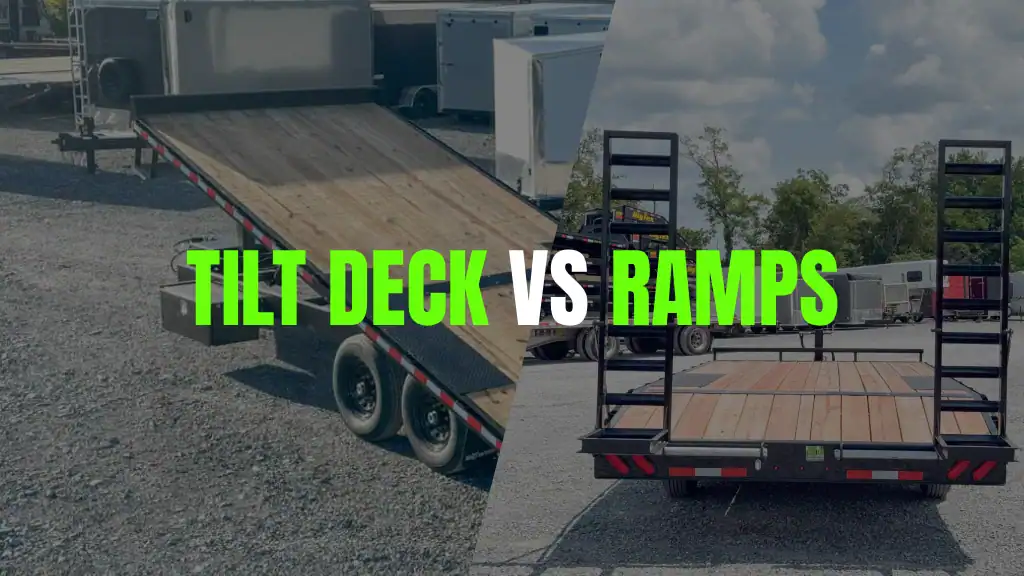
If you’ve ever wrestled with a set of heavy steel ramps in the rain, mud, or snow, you already know why people start looking at tilt deck trailers. Ramps get the job done, but they’re clunky, loud, and sometimes downright dangerous. Tilt decks solve problems you don’t even think about until you’ve been through enough long days loading equipment.
Every guy who’s hauled equipment has a story about ramps. Maybe they slid out from under you. Maybe you strained your back dragging one off the side rail. Maybe you’ve had to line them up three times because the skid steer tires just wouldn’t center. It all takes time, and when you’re working sunup to sundown, every wasted minute feels heavier.
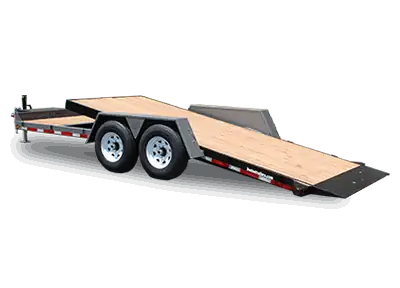
A tilt deck cuts all of that out. Pull the latch, let the deck tilt, and drive on. No bending, no pinched fingers, no wondering if that rusted ramp is about to buckle under a load it probably shouldn’t be carrying. It’s one of those changes you don’t appreciate until you’ve lived without it, then suddenly you wonder how you ever put up with ramps in the first place.
The angle of the load makes a big difference. Ramps can get steep, especially if you’re on uneven ground or the trailer isn’t perfectly level. That’s when things get sketchy! Tires slip, buckets catch, and before you know it you’re fighting gravity. Tilt decks usually give you a much shallower angle, which means driving equipment on feels controlled instead of like a circus stunt.
That lower angle is huge when you’re loading machines with low clearance. Think about scissor lifts, compact tractors, or even cars. With ramps, you’re always worried about scraping or bottoming out. A tilt deck lays it out smoother, letting the machine climb on without any problems.
Let’s be honest, half the time you spend with ramps isn’t driving up them, it’s finding them. Dragging them out, lining them up, then putting them back when you’re done. Multiply that by every load, every day, and it adds up. Tilt decks take all those wasted motions out of the picture. Pull a pin, let gravity or hydraulics do their thing, and you’re already halfway to loaded.
You really notice the benefits of a tilt deck trailer when you have multiple stops per day. You’re not the guy holding up the job because you’re still fiddling with ramps. You’re in, you’re out, and you’re on your way to the next job. More jobs in the same time means more hours billable, less time burned.
Nobody talks about this enough, but ramps beat you up. They’re heavy, they’re awkward, and you’re lifting them when you’re already tired from the rest of the workday. You only get one back, and blowing it out because you’ve been yanking ramps around for twenty years isn’t something to brag about.
A tilt deck does the heavy lifting for you. Gravity or hydraulics tilt the bed, and you’re spared the grunt work. It might not feel like much at first, but over months and years, it’s a game-changer. If you’ve got younger guys working for you, saving their backs matters too. Keeping your crew safe and less worn out is part of keeping them around.

Dan Tabler
05/01/2025
Great place to do business, no pressure very professional and they don’t try to push you into anything. I got several quotes and overall they are the best value

Jonathan
04/30/2025
Had a fantastic experience. Super friendly and helpful staff made my out of state purchase quick and painless. Very knowledgeable and the best prices I could find for hundreds of miles. Highly recommend!

Scot Evans
04/29/2025
I came a very long distance and worked with Shane over a three week period, and I must say from day one through the day I picked up my unit, the service was outstanding. Not only do they sell superior products, but the customer service is top-notch. Thank you, Brechbill Trailer Sales!

Jeffrey Bagley
04/29/2025
Purchased a new Eby dump trailer. Great experience during both a phone order/ purchase, and on my pick up / delivery day. No hidden fee’s or surprises. I would recommend them as everyone I encountered was very positive and helpful.

Frederick Forrester
04/28/2025
Professional,informative, no hassle, person centered approach.Great snack bar (Twinkies available)

Cystal Garrett
04/25/2025
We brought our B wise dump trailer to Jud for things that needed fix and he did an awesome job. Also we had a local Chevy dealer install a brake controller on our 2023 Tahoe, after the 3rd controller, we had Jud look at it. Jud found that the Chevy dealership installed them wrong and it was burning the brake controller module up. Jud took the time to replace it and install a new one for us, he is very professional and explained everything to us. 10 out of 10, we will be back to Brechbill for anything trailer related. Jud definitely earned our trust..

Heather Bearce
04/18/2025
We purchased an enclosed trailer in a matter of three hours. Two of those hours were the drive to the shop. We were approved in 5 mins with Ryan’s help and Steven was amazing with helping us hook up and explain everything in detail. Highly recommend. Friendly and knowledgeable staff with rapid results! You guys rock!!!
Ramps are fine when you’re always loading the same machine. But what happens when you’ve got a pallet of stone, a broken mower, or a couple of ATVs? Suddenly, ramps aren’t the easiest option anymore. With a tilt deck, you’ve got flexibility. Pallets can be set with a forklift, oddball equipment can be driven or rolled right on, and you don’t have to rethink your setup every time the load changes.
Farmers, landscapers, and construction crews all run into this. One day it’s a skid steer, the next day it’s bundles of lumber. A tilt trailer doesn’t care. It adjusts to whatever you’ve got. That kind of versatility is why a lot of guys say once they switch, they never go back.
Let’s talk safety for a second. Ramps slip. They bounce. They kick out if they’re not seated perfectly. And if you’ve ever watched a ramp shoot out from under a machine while the operator’s halfway up, you know how bad it can get in a hurry.
Tilt decks eliminate that whole scenario. The bed is the ramp. There’s no gap, no sliding, no second-guessing if you’ve got the alignment right. Especially if you’re loading alone. and a lot of guys are! So really, it’s just one less thing to worry about. You focus on the machine, not whether the ramps are about to betray you.
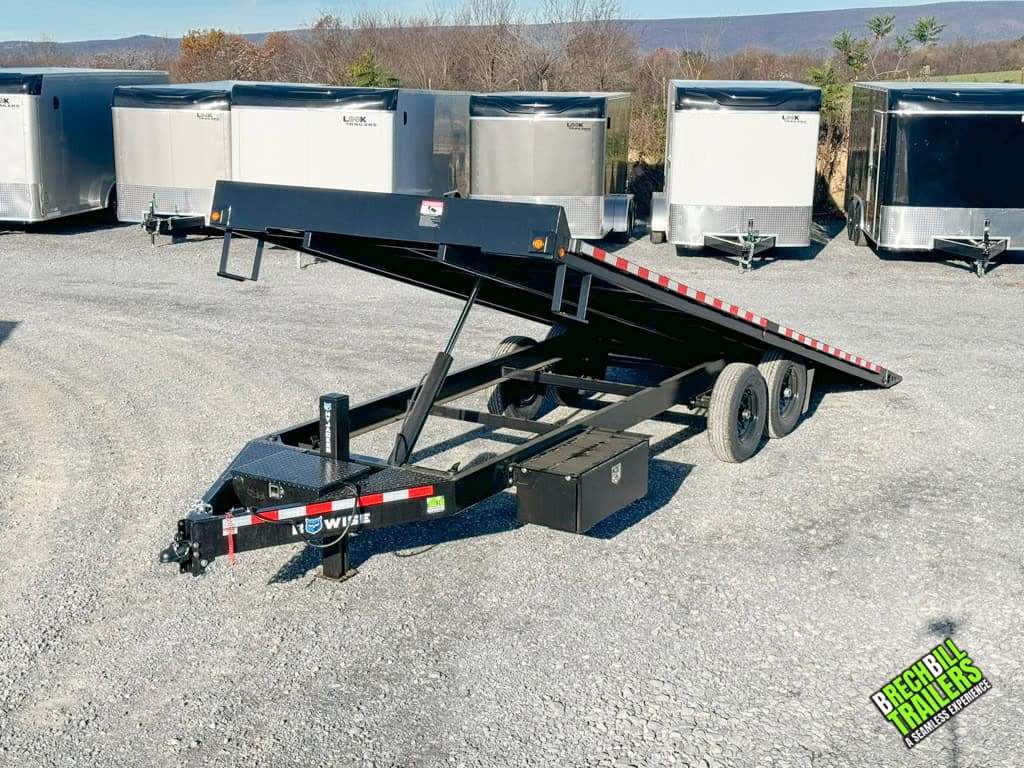
Now, to be fair, ramps aren’t useless. If you’re hauling something super lightweight or you’re only using the trailer a few times a year, a set of ramps might be all you ever need. They’re cheaper, they don’t require hydraulics, and for the occasional user they get the job done. But if you’re hauling equipment regularly, especially heavy or low-clearance equipment… the advantages of tilt decks start to stack up quick.
At the end of the day, both setups will move your equipment. But if you’re looking for speed, safety, and less frustration, tilt decks win. They save time, protect your body, and handle a wider variety of loads with fewer headaches. It’s all about getting work done easier, faster, and safer.
Once you’ve lived with a tilt deck trailer, ramps feel like a step backward. And if you’re already tired of dragging ramps in the mud after a 12-hour day, you don’t need anyone to tell you why a tilt deck just makes sense.
Looking to buy a new or used trailer? Stop by our lot or browse our inventory online here!