Popular Searches:
Displaying top search terms based on the last 90 days.
Popular Searches:
Displaying top search terms based on the last 90 days.

Not using your trailer during the coldest months of the year? It’s important you still know how to properly protect and store your trailer during winter.
Let’s face it, Pennsylvania winters are tough on trailers. Between the freeze-thaw cycles, heavy road salt, and long stretches of cold storage, your equipment can take a beating if it isn’t prepped properly.
A little preparation now can save you costly repairs, inspection failures, and lost time once spring arrives.
Here’s a practical guide to keeping your trailer protected through the winter months.
Salt is your trailer’s worst enemy. If you park your trailer without a thorough cleaning, salt and grime can sit all winter, eating away at the frame and undercarriage. Use a pressure washer or high-volume hose to rinse the underbody, wheel wells, axles, and ramps. If possible, finish with a protective spray or wax coating to keep corrosion at bay.
Cold weather and long storage periods can flatten tires and cause cracking. Inflate to the manufacturer’s recommended PSI before parking. If you have the option, place the trailer on blocks or move it slightly every few weeks to prevent flat spots. For trailers stored outdoors, use tire covers to block UV rays that accelerate rubber breakdown.
Freezing temps drain batteries quickly. If your trailer has an electric winch or interior lighting, disconnect the battery and store it indoors in a dry, climate-controlled space. A trickle charger can keep it ready for spring use.
Moisture and salt are brutal on braking systems and wheel bearings. Grease your bearings before storage and check brake pads for wear. Parking on uneven or wet ground can also lock up brakes, so choose a flat, dry surface when possible.
Where you store your trailer makes a big difference. A gravel or paved lot is far better than grass or dirt, which trap moisture under the frame. If you don’t have indoor storage, consider an enclosed trailer or high-quality cover designed to handle PA winters.
Unlike states with mild winters, Pennsylvania’s constant freeze-thaw cycles create harsh conditions for metal, rubber, and paint. Road crews use heavy salt, which speeds up rust far faster than rain alone. Skipping these steps may not show immediate damage, but by spring you could be facing frame corrosion, cracked tires, or failed inspections.
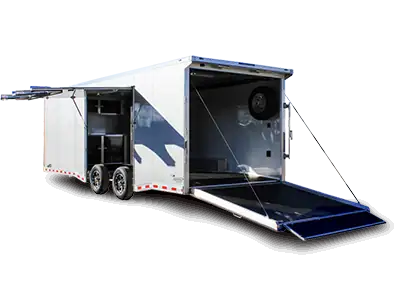
A few hours of prep now can save hundreds in spring repairs or downtime. If you’re considering an upgrade, an enclosed trailer is one of the best defenses against PA winters.
We stock a wide range of enclosed and open trailers built to handle tough conditions. Stop by or browse our inventory online to find the setup that makes winter storage simple and stress-free.
Salt and grime left on your trailer over winter accelerate rust and corrosion, especially on the frame and undercarriage. A thorough wash protects your investment.
Yes. Grass and dirt trap moisture under your trailer, leading to frame rust and brake issues. A paved or gravel surface is much safer.
Inflate tires to the recommended PSI, move the trailer every few weeks, or use blocks to lift it slightly. Tire covers also protect against UV damage.
Yes. Freezing temps drain batteries quickly. Store the battery indoors in a dry, climate-controlled space and use a trickle charger if possible.
Absolutely. Fresh grease protects bearings from moisture and corrosion during long storage periods. It also prevents unexpected breakdowns in spring.
Choose a high-quality, weather-resistant trailer cover. Cheap tarps often trap moisture, leading to more harm than good.
Yes, indoor storage provides the best protection from salt, snow, and UV rays. However, if that’s not an option, proper prep and a good cover can still protect your trailer outdoors.
If possible, check monthly. Look for low tire pressure, signs of moisture, or rodent activity. Moving the trailer occasionally also helps prevent tire issues.
You risk frame corrosion, cracked tires, battery failure, and costly spring repairs. Harsh freeze-thaw cycles and road salt make PA especially tough on trailers.
Yes. Enclosed trailers shield your equipment from snow, salt, and ice, making them a smart long-term investment in Pennsylvania’s harsh winters.