Popular Searches:
Displaying top search terms based on the last 90 days.
Popular Searches:
Displaying top search terms based on the last 90 days.


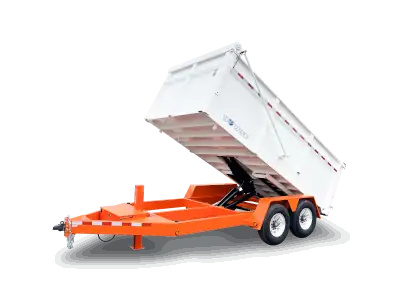
A cheap dump trailer can look like a smart move at first glance. The size is right, the GVWR looks similar, and the price difference can be thousands less than the trailers parked next to it. For buyers trying to keep overhead low, that kind of savings is hard to ignore.
Where people get tripped up is assuming those trailers are comparable just because the numbers line up on paper. They usually aren’t. The differences show up later, after a season or two of real work, when frames flex, paint starts failing, hydraulics slow down, or small repairs turn into regular downtime.
Sometimes a cheaper dump trailer does make sense. Light use, short ownership windows, or occasional hauling can justify it. But many buyers don’t fall into those categories, and they end up paying more over time than they expected when repairs, maintenance, and resale value catch up.
This breakdown isn’t about calling any trailer “junk.” It’s about understanding where costs get cut on cheaper dump trailers, how that affects longevity, and when the savings are real versus when they’re just delayed.
On the surface, budget dump trailers make a convincing case.
They usually come from recognizable manufacturers, carry the same GVWR numbers as more expensive models, and can be pulling mulch or dirt the very day you buy them. For homeowners, hobbyists, or light-duty users, that can be enough.
If you’re dumping a few loads of mulch a year, cleaning up a property, or doing occasional work, a less expensive trailer can absolutely make sense. Plenty of people own one and never have a major issue.
The problem starts when that same trailer is pushed into daily use or heavy material hauling, because that’s where the shortcuts show up.
One of the biggest hidden differences between cheap and higher-quality dump trailers is how the frame handles stress over time.
Budget trailers often rely on tube steel frames or lighter channel construction. Tube steel looks clean and solid when it’s new, but from a service standpoint it’s a nightmare. Moisture gets inside the tube through tiny weld gaps or bolt holes, and corrosion starts where you can’t see it.
By the time you notice a problem, it’s usually serious. Stuff like cracked welds, sagging bed rails, or structural failure that’s expensive or impossible to fix properly.
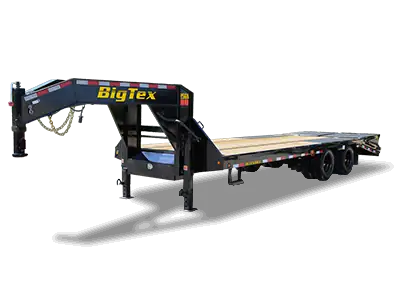
Higher-quality dump trailers tend to stick with open I-beam or heavy channel frames, which don’t trap moisture and can be inspected and repaired more easily. Frames like those used on many Big Tex Trailers and BWise Trailers models cost more up front, but they age far more predictably.
This isn’t a cosmetic issue. Frame problems are the kind that end a trailer’s life early.
Hydraulics are another place where cheaper dump trailers save money in ways buyers don’t realize.
Many budget trailers use gravity-down hydraulic systems. The pump lifts the bed, but gravity is responsible for bringing it back down. That works fine when everything is new, clean, and warm.
Problems start in cold weather, with sticky hinges, or after a season or two of dirt and rust. Beds come down unevenly, slam shut, or refuse to lower at all unless the load is just right. From a safety standpoint, that’s a big deal.
More expensive dump trailers typically use power up / power down systems, giving full hydraulic control in both directions. It costs more, but it allows smoother, safer operation and far fewer service calls down the road.
Then there’s the lift itself. Scissor lifts, common on cheaper trailers, are reliable but put significant strain on the frame during the initial part of the lift. Telescopic cylinders, usually found on higher-end trailers, lift more efficiently and are easier to service if something goes wrong.
This is one of those areas where you don’t feel the difference on day one, but you absolutely feel it three years in.
Another hidden cost of cheaper dump trailers shows up at highway speed.
A cheap dump trailer will often use light-duty axles and 16-inch E-rated tires, which are technically adequate for the rated load. The issue isn’t whether they can handle the weight, it’s whether they can handle the heat, repeated curb scrubbing, and daily cycles of heavy use.
Blowouts are common on trailers that live near their limit. Tires, brakes, bearings, and seals wear faster, and downtime gets expensive if the trailer is part of your business.
Experienced operators often upgrade to Dexter axles and 17.5-inch H-rated tires, which cost more up front but drastically reduce roadside failures. That upgrade alone can wipe out the initial savings of a “cheap” trailer, but many budget models don’t offer it at all.
Paint is the most obvious difference between cheap and premium dump trailers, but it’s often the most ignored at purchase time.
Low-cost trailers usually get a simple paint job. It looks fine on the lot, but it chips easily, especially around the dump bed, gate hinges, and frame rails. Once salt, moisture, and dirt get under the paint, rust spreads fast.
Owners then spend years sanding, spraying, and undercoating just to slow the process down. That’s time, money, and frustration that never shows up on the price tag.
Trailers with multi-stage powder coat systems and primer layers cost more initially but stay structurally sound longer. This is a major reason higher-end brands retain resale value years later, while cheaper trailers struggle to bring decent money used.
If there’s one thing service departments agree on, it’s this: electrical issues take trailers off the road more than almost anything else.
A cheap dump trailer will often use exposed wiring, basic connectors, and minimal sealing. After a few winters, lights flicker, brakes act up, and troubleshooting turns into a guessing game.
Better-built trailers route wiring through the frame, use sealed connectors, and protect vulnerable areas. It doesn’t make the trailer dump better, but it keeps it legal, visible, and reliable.
Despite all this, cheaper dump trailers aren’t automatically bad buys. They make sense when:
A cheap dump trailer stops being a bargain when:
Don’t just think about the immediate cost without considering how hard you expect it to work once the new wears off. Just because a trailer is priced low does not mean it’s bad, and just because one is priced higher does not mean it is better. A cheap dump trailer can be more prone to frequent repairs, while a slightly more expensive option might be more reliable.
If the trailer is only coming out a few times a year, hauling light material, and you do not plan to keep it long term, a cheaper option can make sense. But if it’s going to be loaded every week, pushed through rough sites, and relied on to keep jobs moving, the shortcuts show up fast. Repairs, downtime, and lost resale value have a way of eating up those upfront savings.
Knowing the difference ahead of time is what keeps a “good deal” from turning into a regret.
If you want to see the differences in person and talk through which dump trailer actually fits your work and your budget, stop by our lot in Chambersburg, PA or give us a call. Seeing them side by side makes the decision a lot clearer.

Eric Wolf
08/18/2026
Absolute wonderful service today. I was passing through the area on a cross country trip with my travel trailer. During a fuel stop that happened to be near their shop, I noticed that my leaf spring hanger was severely damaged. In talking with one of the service techs, he told me that if I was able to limp it to their facility they would be able to get me back on the road in no time. From the time I unhooked the trailer on their lot until I was hooked back up and on my way was about 90 minutes. They were absolutely wonderful and communicated the whole time. The price was exceptionally reasonable considering it was an emergency on my end. I wish I lived closer so they could become my full-time shop! They took a very stressful situation and were able to really help me out in a bind. Thank you again!

Jordan Wiggins
05/01/2026
Best place to buy a trailer. We grabbed a 6x12x4 dump trailer. Quinn made sure the process was easy and smooth! Such a great guy, came with my three boys (3,6 & 8) and he made them feel right at home. Jared spoiled my kids with snacks!!! lol Great team! Thanks you all

Dan Tabler
05/01/2025
Great place to do business, no pressure very professional and they don’t try to push you into anything. I got several quotes and overall they are the best value

Jonathan
04/30/2025
Had a fantastic experience. Super friendly and helpful staff made my out of state purchase quick and painless. Very knowledgeable and the best prices I could find for hundreds of miles. Highly recommend!

Scot Evans
04/29/2025
I came a very long distance and worked with Shane over a three week period, and I must say from day one through the day I picked up my unit, the service was outstanding. Not only do they sell superior products, but the customer service is top-notch. Thank you, Brechbill Trailer Sales!

Jeffrey Bagley
04/29/2025
Purchased a new Eby dump trailer. Great experience during both a phone order/ purchase, and on my pick up / delivery day. No hidden fee’s or surprises. I would recommend them as everyone I encountered was very positive and helpful.

Cystal Garrett
04/25/2025
We brought our B wise dump trailer to Jud for things that needed fix and he did an awesome job. Also we had a local Chevy dealer install a brake controller on our 2023 Tahoe, after the 3rd controller, we had Jud look at it. Jud found that the Chevy dealership installed them wrong and it was burning the brake controller module up. Jud took the time to replace it and install a new one for us, he is very professional and explained everything to us. 10 out of 10, we will be back to Brechbill for anything trailer related. Jud definitely earned our trust..