Popular Searches:
Displaying top search terms based on the last 90 days.
Popular Searches:
Displaying top search terms based on the last 90 days.


When people start shopping for a gooseneck trailer, brand names come up fast. Big Tex is usually near the top of the list. Valley comes up too, especially if livestock is involved. That’s where a lot of confusion starts, because while both brands make gooseneck trailers, they’re not really chasing the same customer.
Comparing Big Tex and Valley is less about “which is better” and more about which one is built for what you actually haul. These two manufacturers solve different problems, and once you understand that, the decision usually becomes pretty clear.
This isn’t a sales pitch or some sort of spec-sheet flex. It’s a real-world look at how these trailers are designed, how they’re used, and where each one makes sense long-term.
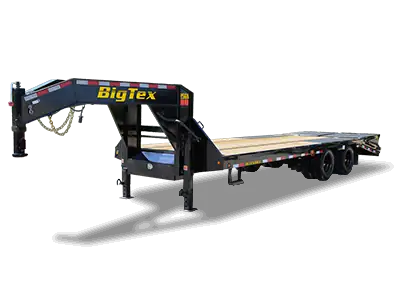
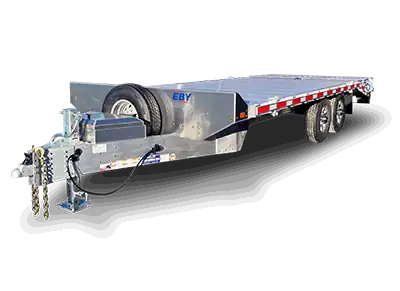
Big Tex is built around general equipment hauling. Contractors, hotshot operators, equipment renters, landscapers, and anyone moving iron, machines, or freight are the core audience. Their gooseneck lineup is wide and aggressive, covering everything from lighter 14K trailers to massive 22K and 25K deckovers meant to live behind a one-ton truck.
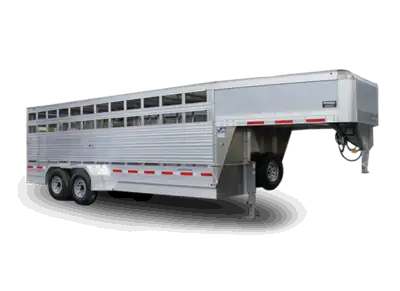
Valley, on the other hand, is livestock-first. Their DNA comes from stock trailers and horse trailers, not equipment decks. Their gooseneck models are designed around animal safety, balance, ventilation, and ease of handling on farms and ranches. Yes, they’re steel. Yes, they’re tough. But the design priorities are completely different.
If you crawl underneath a Big Tex gooseneck, you’ll usually find a traditional I-beam or channel-based frame. It’s heavy, straightforward, and designed to carry extreme point loads. Machines don’t move. They don’t panic. They don’t shift suddenly. Big Tex designs their frames to accept that kind of static punishment day after day.
Valley frames are engineered around a different reality. Livestock moves. Weight shifts constantly. Animals lean, brace, and redistribute themselves every second of the haul. Valley designs their goosenecks to stay stable under dynamic loads, not to carry a skid steer or excavator banging on the deck.
That’s why Valley trailers often feel “lighter” for their size. They’re not weak, they’re just optimized. Heavy where they need to be, flexible where they should be, and simple enough to service on a farm.
Big Tex dominates payload numbers. There’s no way around it.
A Big Tex 22GN can carry north of 15,000 pounds and barely blink doing it. Even the 14GN series pushes payload well into territory that’s completely unnecessary, and sometimes unsafe, for livestock.
Valley’s gooseneck stock trailers typically fall into the 12K–14K GVWR range. That’s plenty for cattle, horses, or mixed livestock loads, but it’s not meant for iron. Trying to haul equipment in a stock trailer is not just inefficient, it’s a liability.
This is a key point buyers miss: more payload is not always better. Extra capacity is useless if the trailer isn’t designed for the load type.
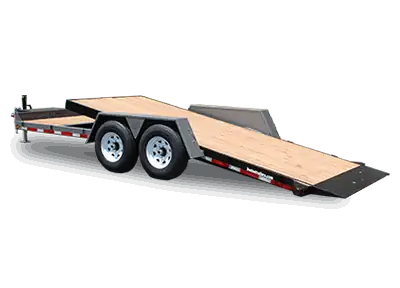
Big Tex builds goosenecks assuming you’ll be driving equipment onto them. Mega Ramps, dovetails, wide deckovers, and aggressive traction surfaces all exist to make loading machines safer and more predictable. Hydraulics and drop-leg jacks are sized for weight, not finesse.
Valley trailers don’t use ramps at all in most cases. Swing doors, sliders, and center gates are there to reduce stress on animals and handlers. Livestock loads best when it’s calm and level, not when forced up steel ramps.
Neither approach is better. They’re just solving totally different problems.
Big Tex typically runs heavy Dexter axles with leaf-spring suspension on their goosenecks. It’s durable, serviceable almost anywhere, and designed to live under max load for long stretches. Some larger models come with oil-bath hubs to reduce maintenance on high-mile commercial rigs.
Valley often uses torsion axles on stock trailers, especially in the mid-range sizes. That setup gives animals a noticeably smoother ride, reduces stress, and helps prevent fatigue during longer hauls. For livestock, ride quality matters more than brute strength.
Again, this isn’t about one being “stronger.” It’s about using the right suspension for what’s inside the trailer.
Big Tex has a reputation for toughness, and it’s earned. These trailers are everywhere because they can take abuse. Contractors beat on them daily, and they keep working. That said, they’re also known for needing maintenance. Paint wear, wiring exposure, and hardware fatigue show up eventually, especially in salty winter states.
Valley trailers tend to age more quietly. Owners talk less about fixes and more about trailers just doing their job. Fewer moving parts, fewer hydraulics, and simpler systems mean fewer things to break. For farmers who don’t want to mess with constant repairs, that matters.
Here’s where comparisons often go sideways. Someone looks at a Big Tex 22GN price and a Valley gooseneck stock trailer price and assumes they’re competitors.
They aren’t.
You’re paying for capacity and complexity with Big Tex. Massive frames, ramps, hydraulics, and payload cost money.
With Valley, you’re paying for purpose-built livestock design. Floors, mats, gates, escape doors, and balance don’t show up as horsepower numbers, but they matter immensely if you haul animals.
If you’re buying the cheaper trailer for the wrong job, it’s not actually cheaper.
Big Tex makes sense if you haul equipment, machines, pallets, freight, or anything heavy and rigid. If your trailer sees construction sites, gravel yards, rental yards, or highways more than pastures, Big Tex is in its element.
It’s also the right choice if dealer coverage and parts availability matter. Big Tex’s footprint is massive, and that’s a real advantage for commercial users.
Valley is the right answer for livestock operations, period. Cattle, horses, goats, hogs. Livestock is what they build trailers for. The design choices reflect decades of knowing what animals do inside a trailer, not what machines do on top of one.
If your world involves farms, barns, auctions, and stockyards, Valley makes life easier and safer.
Big Tex and Valley are not rivals in the traditional sense. They don’t fight over the same buyer unless that buyer hasn’t clearly defined their needs yet.
Big Tex builds equipment haulers that happen to be goosenecks. Valley builds livestock trailers that happen to use gooseneck hitches.
If you match the trailer to the job, both brands do what they’re supposed to do very well. If you don’t, no spec sheet or brand name is going to save you from regret later.
And with trailers, regret gets expensive fast! Not sure which is right for you? Come visit our location in PA and talk to an expert today!

Eric Wolf
08/18/2026
Absolute wonderful service today. I was passing through the area on a cross country trip with my travel trailer. During a fuel stop that happened to be near their shop, I noticed that my leaf spring hanger was severely damaged. In talking with one of the service techs, he told me that if I was able to limp it to their facility they would be able to get me back on the road in no time. From the time I unhooked the trailer on their lot until I was hooked back up and on my way was about 90 minutes. They were absolutely wonderful and communicated the whole time. The price was exceptionally reasonable considering it was an emergency on my end. I wish I lived closer so they could become my full-time shop! They took a very stressful situation and were able to really help me out in a bind. Thank you again!

Jordan Wiggins
05/01/2026
Best place to buy a trailer. We grabbed a 6x12x4 dump trailer. Quinn made sure the process was easy and smooth! Such a great guy, came with my three boys (3,6 & 8) and he made them feel right at home. Jared spoiled my kids with snacks!!! lol Great team! Thanks you all

Dan Tabler
05/01/2025
Great place to do business, no pressure very professional and they don’t try to push you into anything. I got several quotes and overall they are the best value

Jonathan
04/30/2025
Had a fantastic experience. Super friendly and helpful staff made my out of state purchase quick and painless. Very knowledgeable and the best prices I could find for hundreds of miles. Highly recommend!

Scot Evans
04/29/2025
I came a very long distance and worked with Shane over a three week period, and I must say from day one through the day I picked up my unit, the service was outstanding. Not only do they sell superior products, but the customer service is top-notch. Thank you, Brechbill Trailer Sales!

Jeffrey Bagley
04/29/2025
Purchased a new Eby dump trailer. Great experience during both a phone order/ purchase, and on my pick up / delivery day. No hidden fee’s or surprises. I would recommend them as everyone I encountered was very positive and helpful.

Cystal Garrett
04/25/2025
We brought our B wise dump trailer to Jud for things that needed fix and he did an awesome job. Also we had a local Chevy dealer install a brake controller on our 2023 Tahoe, after the 3rd controller, we had Jud look at it. Jud found that the Chevy dealership installed them wrong and it was burning the brake controller module up. Jud took the time to replace it and install a new one for us, he is very professional and explained everything to us. 10 out of 10, we will be back to Brechbill for anything trailer related. Jud definitely earned our trust..