Popular Searches:
Displaying top search terms based on the last 90 days.
Popular Searches:
Displaying top search terms based on the last 90 days.

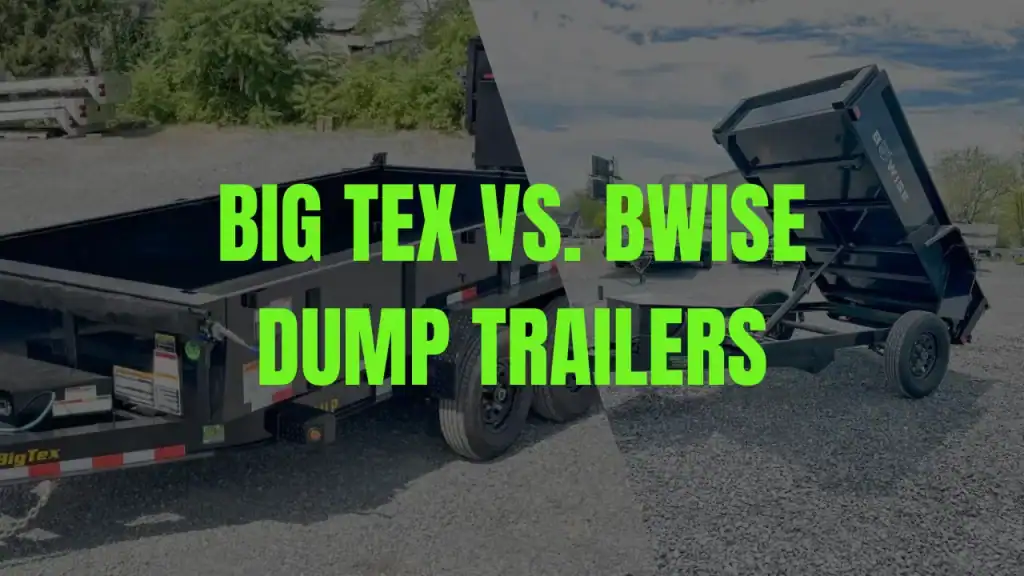
When you’re shopping for a dump trailer, the sticker price is only part of the story. What really matters is how that trailer holds up after years of hauling rock, mulch, demolition debris, or firewood. Paint, frame design, hydraulics, wiring. This is how we know if a trailer is going to become a long-term asset or a slow, expensive headache.
Big Tex and BWise are two names that come up constantly when people start comparing dump trailers. Both brands build capable equipment, both are widely used, and both can get the job done. The difference is how they age. This article isn’t about which one is cheaper today. It’s about which one still makes sense five or ten years down the road.
At first glance, a Big Tex and a BWise dump trailer might not look all that different. Both use heavy steel floors. Both are available in similar sizes and weight ratings. But once you start looking underneath, the construction approaches separate pretty quickly.
BWise builds their dump trailers around tubular steel frames. That matters because tubular construction spreads stress more evenly across the frame and reduces flex when the trailer is loaded heavy or used on uneven ground. It’s the kind of design you see when a manufacturer expects the trailer to experience hard conditions.
Big Tex, on the other hand, uses channel frames on some models and I-beam frames on others. Channel frames are lighter and cheaper to produce, which helps keep the price down, but they can flex more under extreme loads. Big Tex compensates with heavier cross members, and in normal use the frames generally hold up.
Still, over years of heavy hauling, the difference starts to show.
Sidewalls are another area where BWise leans heavier. Their trailers typically use thicker steel and formed external supports that resist bowing when hauling shifting materials. Big Tex sidewalls are thinner on standard models, which works fine for light to moderate loads but is more vulnerable to distortion if the trailer is pushed hard consistently.
If you talk to trailer owners long enough, paint and rust always come up. And this is where the long-term gap between Big Tex and BWise becomes hard to ignore.
Big Tex trailers have earned a reputation for developing rust earlier than expected, especially on welds, seams, and undercarriage components. Owners frequently report surface rust within the first year if the trailer isn’t aggressively undercoated and maintained. In Pennsylvania, where road salt is a fact of life, that becomes a real issue quickly.
The reality is that Big Tex paint systems are basic by design. The company backs the structural parts of the trailer much longer than the finish, and their paint warranty is very short. That doesn’t mean the trailer is unusable, but it does mean owners often find themselves sanding, spraying, and undercoating just to keep corrosion under control.
BWise goes a completely different route. Their dump trailers use a multi-stage powder coating process that starts with extensive metal prep and finishes with thick, durable coating. In the real world, that translates to trailers that simply look better for longer. Owners regularly report minimal fading and far less rust, even when trailers live outdoors year-round.
Over time, that difference affects more than appearance. Rust leads to seized bolts, weakened welds, and faster wear on moving parts. Avoiding those problems saves money and downtime.
Hydraulics are the heart of a dump trailer, and both brands approach them differently.
Big Tex sticks to relatively simple hydraulic setups. Most models use electric-over-hydraulic scissor hoists to lift the bed. Fewer moving parts means fewer things to break, and when something does fail, repairs are usually straightforward. The tradeoff is fewer features and more manual work.
BWise, especially on their higher-end dump trailers, builds fully integrated hydraulic systems. These setups often control not just the bed lift, but also tailgates, jacks, and stabilizers. From an operator’s standpoint, that’s a huge quality-of-life upgrade. Less cranking, less climbing, less wrestling with components in bad weather.
Complex systems always introduce more potential failure points, but BWise has earned a reputation for building those systems well. Owners consistently report reliable hydraulics, smooth operation, and fewer leaks or seal issues over time than expected.
Wiring is one of those things nobody thinks about until lights stop working halfway through a job. On Big Tex trailers, wiring is functional but basic. There have been reports of exposed connections, unsealed terminals, and wiring routes that leave components vulnerable to moisture and road debris.
BWise takes a more protected approach, routing wiring through the frame and sealing connections. It’s not flashy, but it’s exactly the kind of design decision that prevents annoying electrical gremlins years later.
One of the strongest cases for Big Tex durability comes from owners who’ve used them extremely hard. There are documented examples of Big Tex dump trailers surviving hundreds of thousands of miles, heavy construction use, and years of abuse. The catch is that those trailers required regular maintenance, rust control, repairs, and a lot of owner attention to keep going.
BWise owner experiences follow a different pattern. Instead of stories about constant upkeep, the feedback tends to focus on things just working. Less rust. Fewer repairs. Better resale value when it’s time to move on.
In other words, both brands can survive hard work. One just asks more of the owner along the way.
Warranty terms often reflect how confident a manufacturer is in their product. Big Tex offers solid structural coverage, but their paint and wiring warranties are short, which lines up with the real-world experiences of owners.
BWise offers longer structural warranties on their higher-end dump trailers. That extended coverage doesn’t mean nothing will ever break, but it does show confidence in the core build quality.
There’s no avoiding it: BWise dump trailers cost more. Sometimes a lot more. A comparable BWise model can cost thousands more upfront than a Big Tex.
The real question is whether that extra money comes back to you over time. For light-duty or occasional use, it often doesn’t. A Big Tex trailer maintained properly can serve a homeowner, hobby farmer, or light-duty contractor just fine.
For anyone running a dump trailer regularly (multiple loads a week, heavy materials, year-round use), the math changes. Less maintenance, less downtime, stronger resale value, and fewer rust-related headaches can easily outweigh the initial price difference.
If the question is strictly about long-term durability, the answer is fairly clear. BWise dump trailers are built to hold up better over time. Their powder coating, heavier construction, protected wiring, and integrated hydraulics all point in that direction.
Big Tex trailers aren’t bad trailers. They’re affordable, widely available, and capable when maintained. But they demand more attention to stay in good shape, especially in harsh climates like Pennsylvania.
So the choice comes down to how you use your trailer. If budget is tight and usage is light, Big Tex makes sense. If the trailer is a critical tool you rely on constantly, BWise earns its reputation as the longer-lasting option.
And when you’re buying equipment meant to work for decades, that difference matters.
Feel free to stop by and check them out in person at our Chambersburg PA location!
Owners who run Big Tex dump trailers hard should expect to budget time and money for rust control, paint touch-ups, undercoating, and occasional weld or hardware repairs.
Despite being heavier built in certain areas, BWise trailers are designed to handle heavy loads efficiently without sacrificing dumping performance. The frame and hoist systems are matched intentionally, so the trailer lifts dense loads cleanly and predictably.
While BWise hydraulic systems are more complex, real-world feedback shows they hold up well when maintained properly. The key difference is that BWise designs these systems as integrated packages rather than add-ons.
Big Tex is often easier to repair quickly in the field or through local shops, mainly due to simpler systems and wider parts availability. BWise parts and service may require more dealer involvement depending on location. That said, BWise trailers typically need fewer repairs in the first place, which balances the equation for many owners.
BWise dump trailers tend to hold resale value better, especially when cosmetic condition matters to buyers. Powder-coated frames, reduced rust, and intact wiring make older BWise trailers more attractive in the used market. Big Tex trailers with visible rust or patched repairs often sell faster but at a lower percentage of their original price.

Dan Tabler
05/01/2025
Great place to do business, no pressure very professional and they don’t try to push you into anything. I got several quotes and overall they are the best value

Jonathan
04/30/2025
Had a fantastic experience. Super friendly and helpful staff made my out of state purchase quick and painless. Very knowledgeable and the best prices I could find for hundreds of miles. Highly recommend!

Scot Evans
04/29/2025
I came a very long distance and worked with Shane over a three week period, and I must say from day one through the day I picked up my unit, the service was outstanding. Not only do they sell superior products, but the customer service is top-notch. Thank you, Brechbill Trailer Sales!

Jeffrey Bagley
04/29/2025
Purchased a new Eby dump trailer. Great experience during both a phone order/ purchase, and on my pick up / delivery day. No hidden fee’s or surprises. I would recommend them as everyone I encountered was very positive and helpful.

Frederick Forrester
04/28/2025
Professional,informative, no hassle, person centered approach.Great snack bar (Twinkies available)

Cystal Garrett
04/25/2025
We brought our B wise dump trailer to Jud for things that needed fix and he did an awesome job. Also we had a local Chevy dealer install a brake controller on our 2023 Tahoe, after the 3rd controller, we had Jud look at it. Jud found that the Chevy dealership installed them wrong and it was burning the brake controller module up. Jud took the time to replace it and install a new one for us, he is very professional and explained everything to us. 10 out of 10, we will be back to Brechbill for anything trailer related. Jud definitely earned our trust..

Heather Bearce
04/18/2025
We purchased an enclosed trailer in a matter of three hours. Two of those hours were the drive to the shop. We were approved in 5 mins with Ryan’s help and Steven was amazing with helping us hook up and explain everything in detail. Highly recommend. Friendly and knowledgeable staff with rapid results! You guys rock!!!